


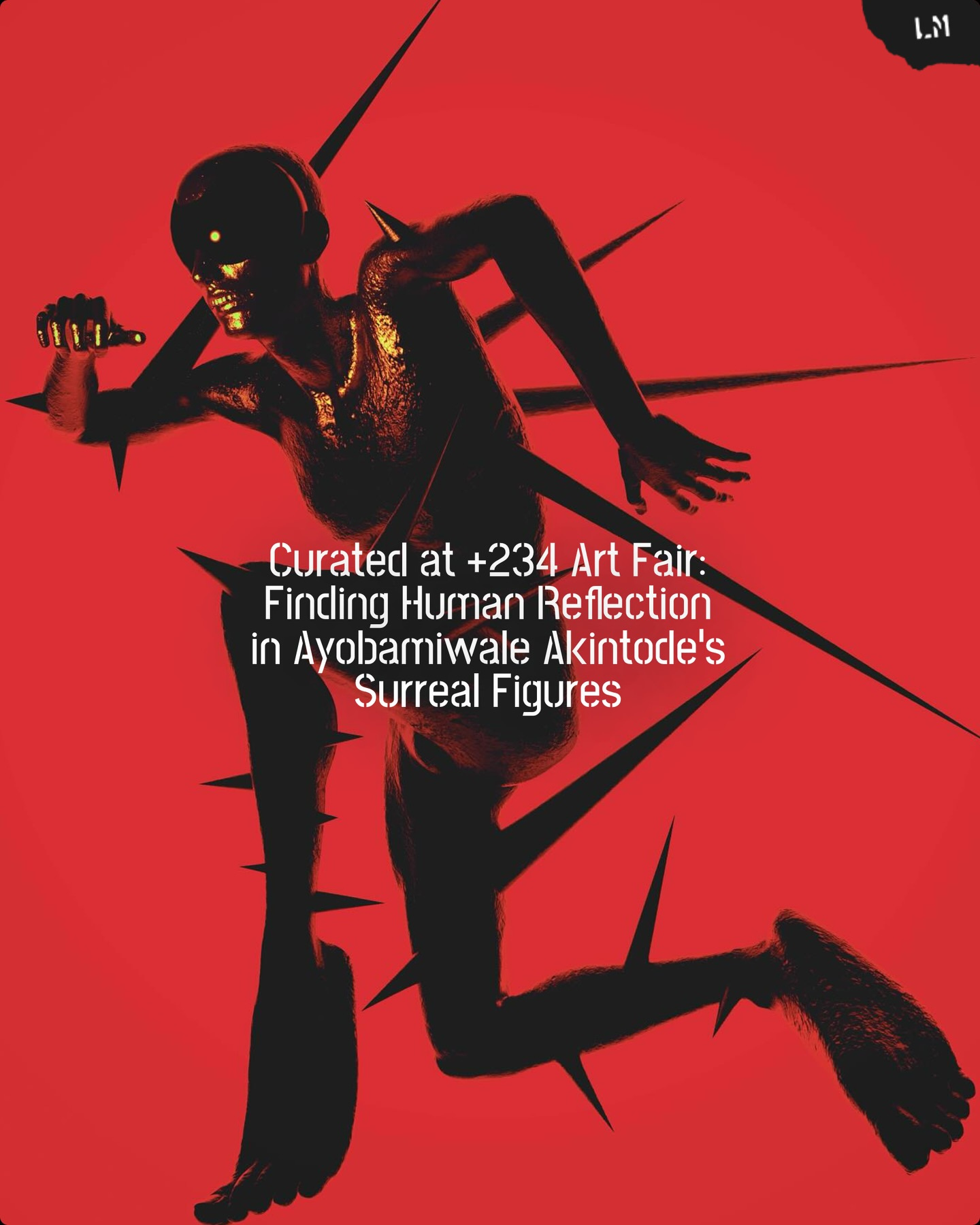
Ayobamiwale Akintode’s work reminds us that digital art is not “less than” — it is art in its own right, holding just as much depth, process, and meaning as any traditional medium.
In this conversation, he speaks on what it meant to see digital art given a prominent stage at +234 Art Fair, and why that kind of visibility matters in a space where the medium is still sometimes overlooked or misunderstood. His reflections are honest and necessary: art is a way of communicating ideas, and the method used to bring those ideas to life should never matter more than the message itself.
From spending months refining a piece like MotherAnt, to stepping away from it just to learn new 3D modeling techniques before returning to complete it, his process reveals the patience, skill, and intentionality that often go unseen in digital practice. Beyond the technical side, his work is also deeply introspective, created to make people pause, sit with their emotions, and reflect on what they feel.
What stands out most is the evolution in his practice — from simply exploring what looked good to creating with more structure, direction, and purpose. His art does not just invite people to look; it invites them to think, to feel, and to turn inward.


L.M: You recently exhibited your work at the +234artfair; how did it feel to see digital art given such a prominent stage alongside traditional mediums?
Ayobamiwale: It was a positive feeling, it’s commendable. I think that many older people in this part of the world often overlook digital art and consider it unserious or not “real” art because it doesn’t involve an actual paint brush and canvas. These people need to understand that art is a medium of communicating ideas. However you choose to do it shouldn’t matter as long as a message is being passed across. +234 Art Fair giving digital art a platform is a step in the right direction, and hopefully we get more of this across the country. More people need to be exposed to the ideas that are embedded in these artworks, and we also need more exposure for the artists as well because there is a huge pool of young talented individuals who can operate on a global level if given a chance.
L.M: People often think digital art is “faster” than painting. Can you break down a piece that took you longer than a physical oil painting would have? What were the hidden complexities that the audience doesn’t see?
Ayobamiwale: The timing depends on how detailed the piece is. I’ve spent days on some pieces and also spent months on others. I’d say “MotherAnt” took the longest to complete; it took me about 4 months. I think the only complexity was designing and modeling the main character in the piece. I kept iterating because there was a particular look I wanted the character to have. The piece was abandoned for about 2 months because I had to study new 3D modeling techniques and practiced with other pieces before coming back to it.
L.M: Every creator has a “Day Zero.” Can you walk us through the moment you transitioned from just “using tools” to identifying as a digital artist? What was the first piece that made you realize you had found your voice?
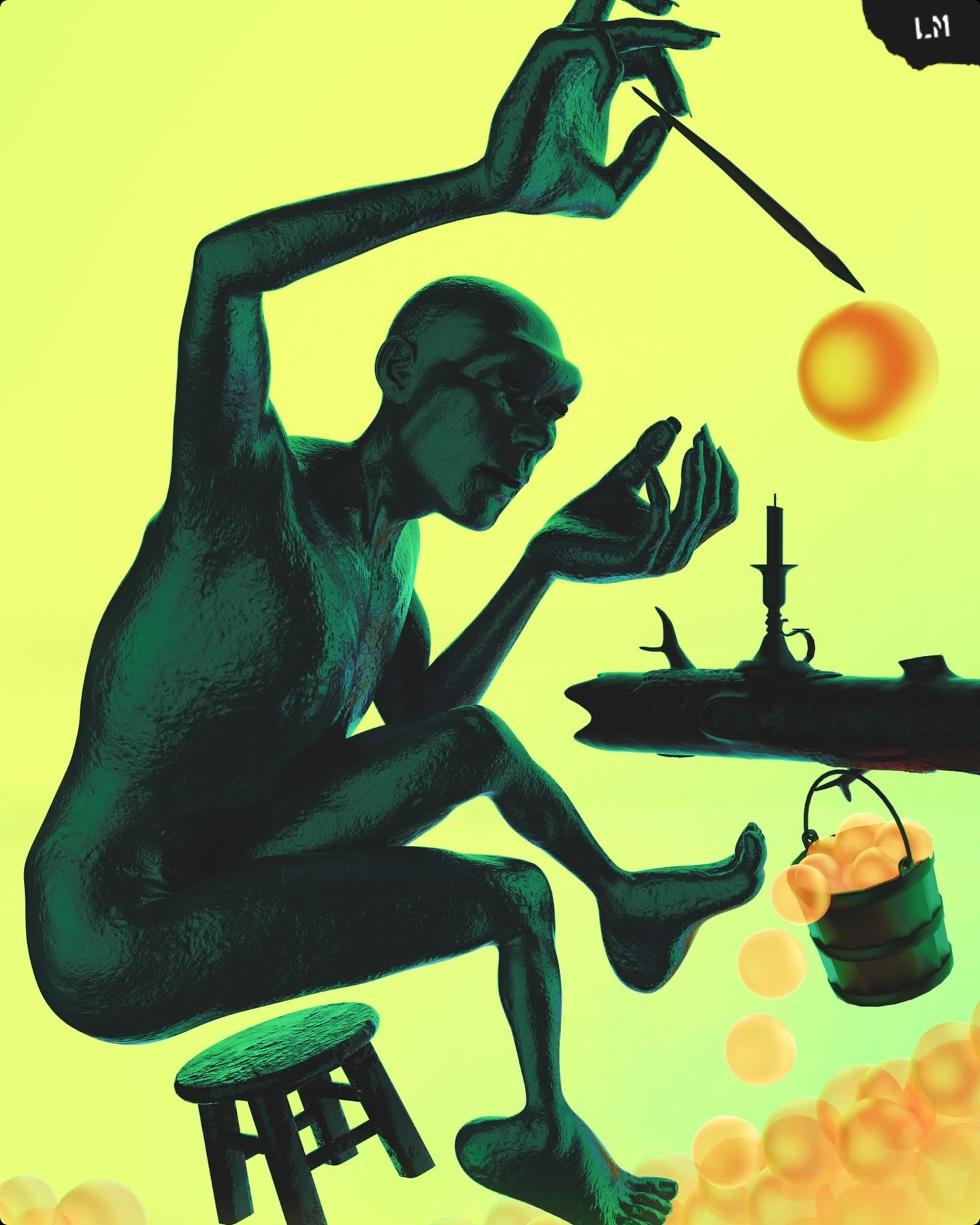
Ayobamiwale: “Grey Ballet” was the first time I wrote down a description before making the artwork. That was my first intentional piece and when I understood what visual communication really meant. Before then I would just get on my computer and explore till I arrived at something that looked good. I still do that sometimes but most of my work nowadays is premeditated.
L.M: Looking back at your early Instagram posts compared to your current exhibition pieces, what is the biggest technical or conceptual shift you’ve made in your art?
Ayobamiwale: The more you practice, the higher your technical skill level is, and that makes you more confident to explore more complex concepts. This also works the other way round; the more complex your concepts are, the more compelled you are to upskill. I’ve learnt to become more intentional rather than “running on vibes”; of course a lot of things still change during the process, but there’s a level of structure/creative direction.
L.M: Much of your work seems to blend organic human forms with surreal figurines. What do you want people to feel when they come across your art?
Ayobamiwale: I want my art to be a mirror; my intention is for it to set off a wave of introspection because you only understand the world around you as much as you understand yourself. So I want it to make people sit with their feelings, both the positive and negative ones, and reflect on them.
L.M: Many creators think they need the latest Pro Display or iPad to compete. What is the most “low-tech” tool you still use in your high-tech workflow that keeps your art grounded?
Ayobamiwale: I think Microsoft paint, that’s what I started with before moving to Photoshop and I still use it sometimes when I want to make slight edits.
L.M: In a market that still prioritizes physical “one-of-one” canvases, how do you educate Nigerian collectors on the value of a digital file or a high-end limited print?
Ayobamiwale: If the question is based on personal experience, then collectors already know what they’re looking for and most times have no issues with collecting prints or commissioning a one-of-one piece. The value of the digital files depends on what they’re to be used for; an animation for an advert won’t have the same value as an album cover art or t-shirt design. If the question is based on general terms, then I don’t think there’s much educating to do. We can only put work out for these collectors to see; the ones that understand the value or have a need for digital art will stay.
Follow @6_wrld on Instagram and read more stories on our website https://lagos-meet.com/