

Professional Ethics: Inspiration vs. Stealing

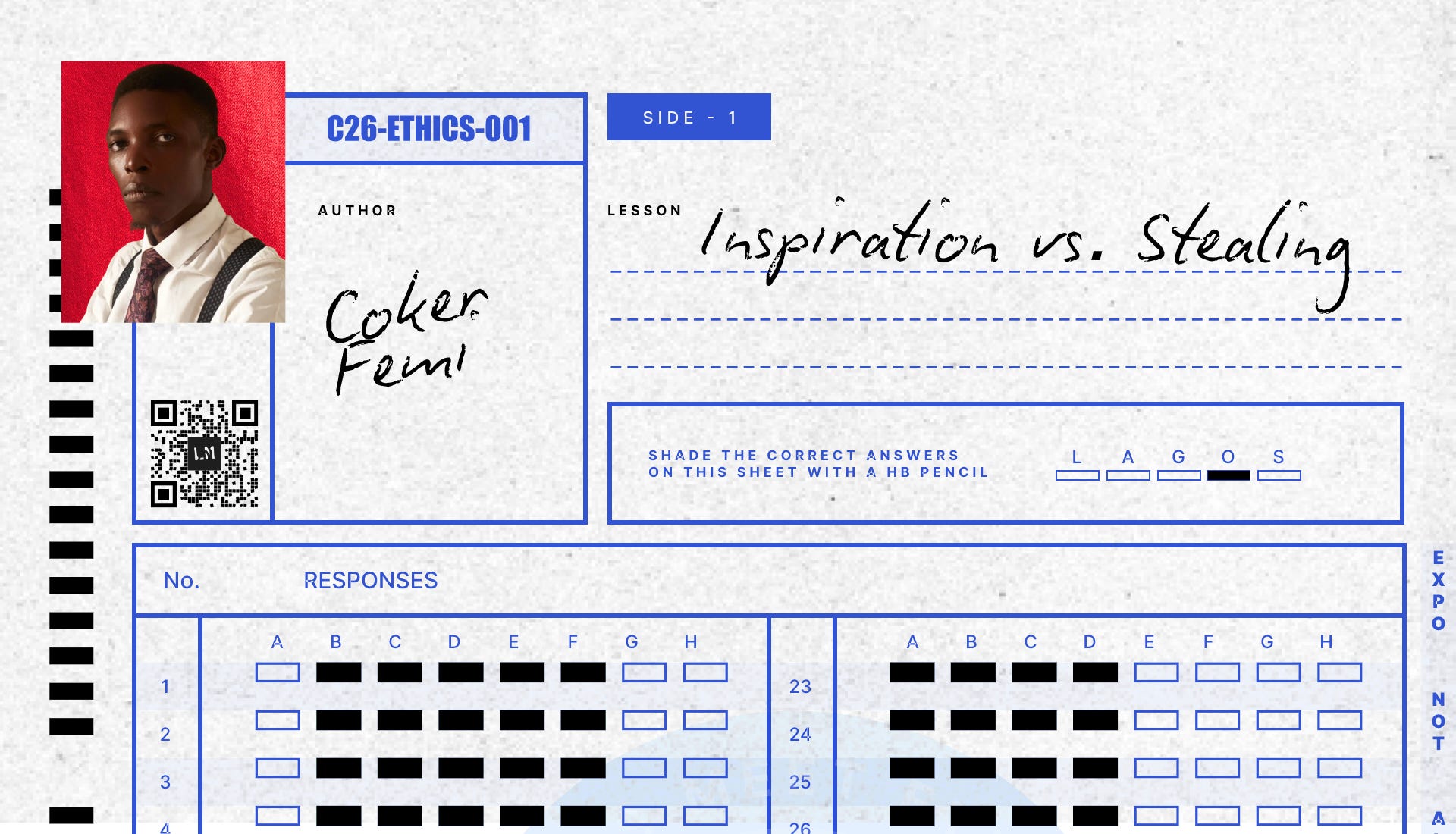
True creative depth isn’t about pretending you operate in a vacuum, entirely immune to influence. Instead, it relies on a deliberate, deeply empathetic process: consideration. It is the difference between stealing and being inspired.
As we all know, stealing is taking something that doesn’t belong to you, it’s very different from being inspired. To be inspired you need to find certain things in a work that is worthy of emulation. These things could be elements like the colour palette, or maybe even the wit and humour behind the work, it could be how the font was written, or any other reason you believe the work is worthy of emulation. But importantly, you shouldn’t emulate the whole work; that’s stealing. You cannot reproduce someone’s original work, every piece of creative work lives in a context that makes it perfect for its own use case. The work could be funny because of the seriousness of the message, or the colours could be tropical because the palette suits the brand. Stealing work verbatim makes your work inconsiderate; which is a disservice to the service you are rendering.
The first thing you should do before you even start to gather inspiration and pool together multiple references is that you must ask yourself what story you need to tell, and to who. You must understand the what, why, when, and where. You must be armed with knowledge about the client and the market they operate in. It is within this context that you will then apply consideration to ensure you curate the right references that excel in their own execution and provide inspiration worthy of emulation.
The most original works out there combine several key elements from a bunch of references and inspiration to produce something that hasn’t been created before and works perfectly for its context. You must first gather all of your references and inspiration into a moodboard; so you can see them all in one place. You can use Pinterest or Are.na to organize pictures and video files in one place, but you can also use Figma, canva or whatever platform you already use to do this so all your references sit within easy reach as you get to design. I also recommend tagging your references properly with short notes on why you included them in the moodboard. If you like a work because of its colour, it’s important to note that explicitly.
If you go through this process properly, you will always end up with something very original.